

Those who walked the Laugavegur in 1982 – 44 years ago – spent four days on their own, apart from the hut wardens. There was no need to book online or use a bank card; the hut warden checked you in on the spot and payment was made in cash.
In 2001, I invited my family to join me on the Laugavegur hike, and it was now necessary to book the huts through Ferðafélag Íslands by email, providing names and ages. This meant that Ferðafélag Íslands was able to provide important advice for hikers – in this case, the recommendation to refrain from the trek, as my son was only 1½ years old. However, the association accepted our indication of prior experience, as this was the third time I was undertaking the trek.
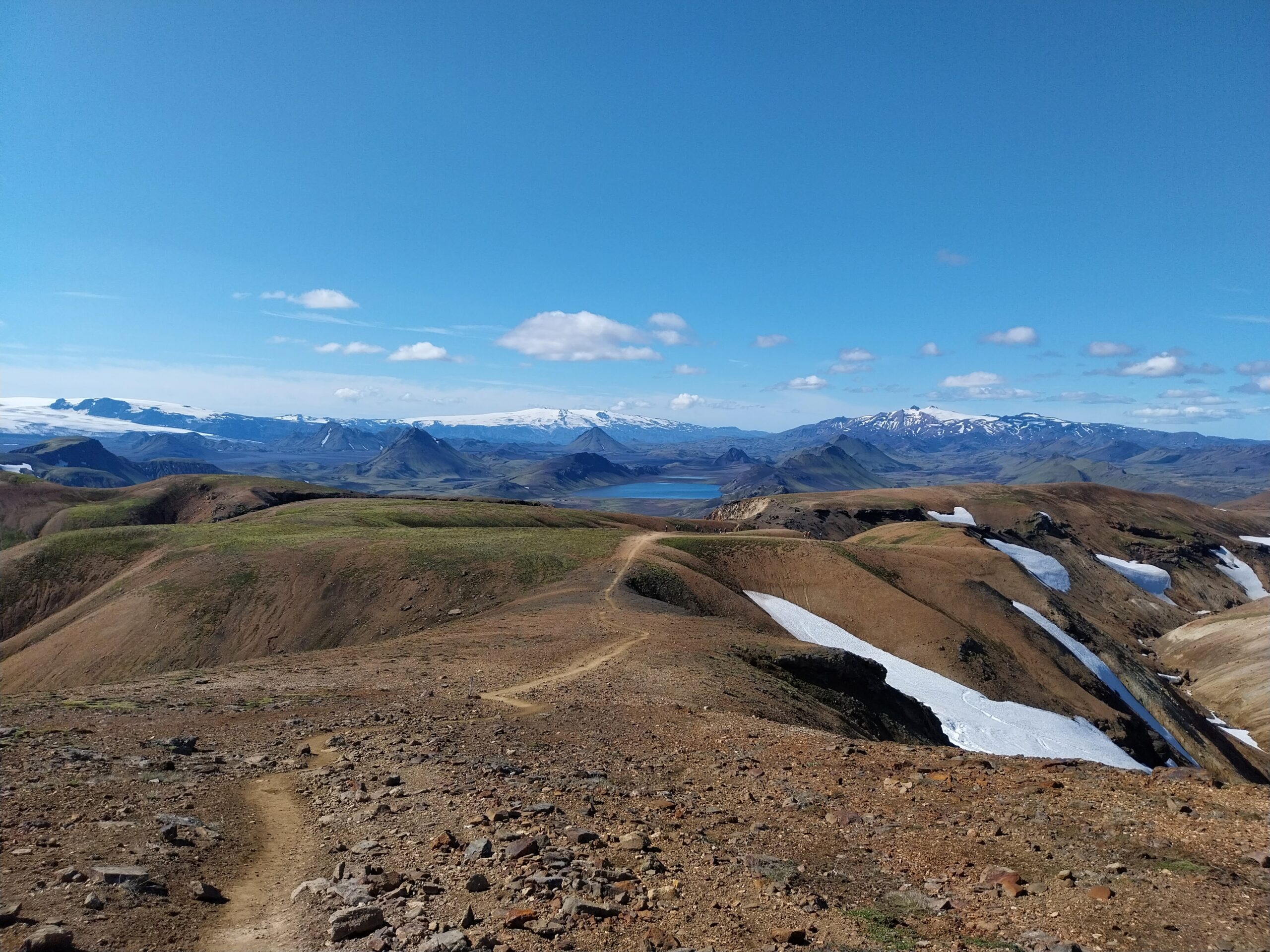
In 2001, the rivers were carrying even more water. The water in the River Þröngá reached up to the hips back then, whereas this year it only came up to the knees. To successfully use the three-point technique when crossing the river, a shovel handle was more suitable, as telescopic sticks were simply swept away by the raging current. What was strange at the time, however, was that – contrary to previous experience – there was suddenly an Icelandic four-wheel-drive car at every river crossing, with a driver inside who had nothing better to do with his time than stare through the windscreen. When I asked the warden at Emstrur what had got into the Icelanders – given that they now only viewed nature through a windscreen – the warden remarked that my son was the youngest person to have travelled this trail since the settlement of Iceland. In other words: Ferðafélag Íslands felt compelled to send a supervisor to the river crossings to rescue the children from their dreadful parents in an emergency.
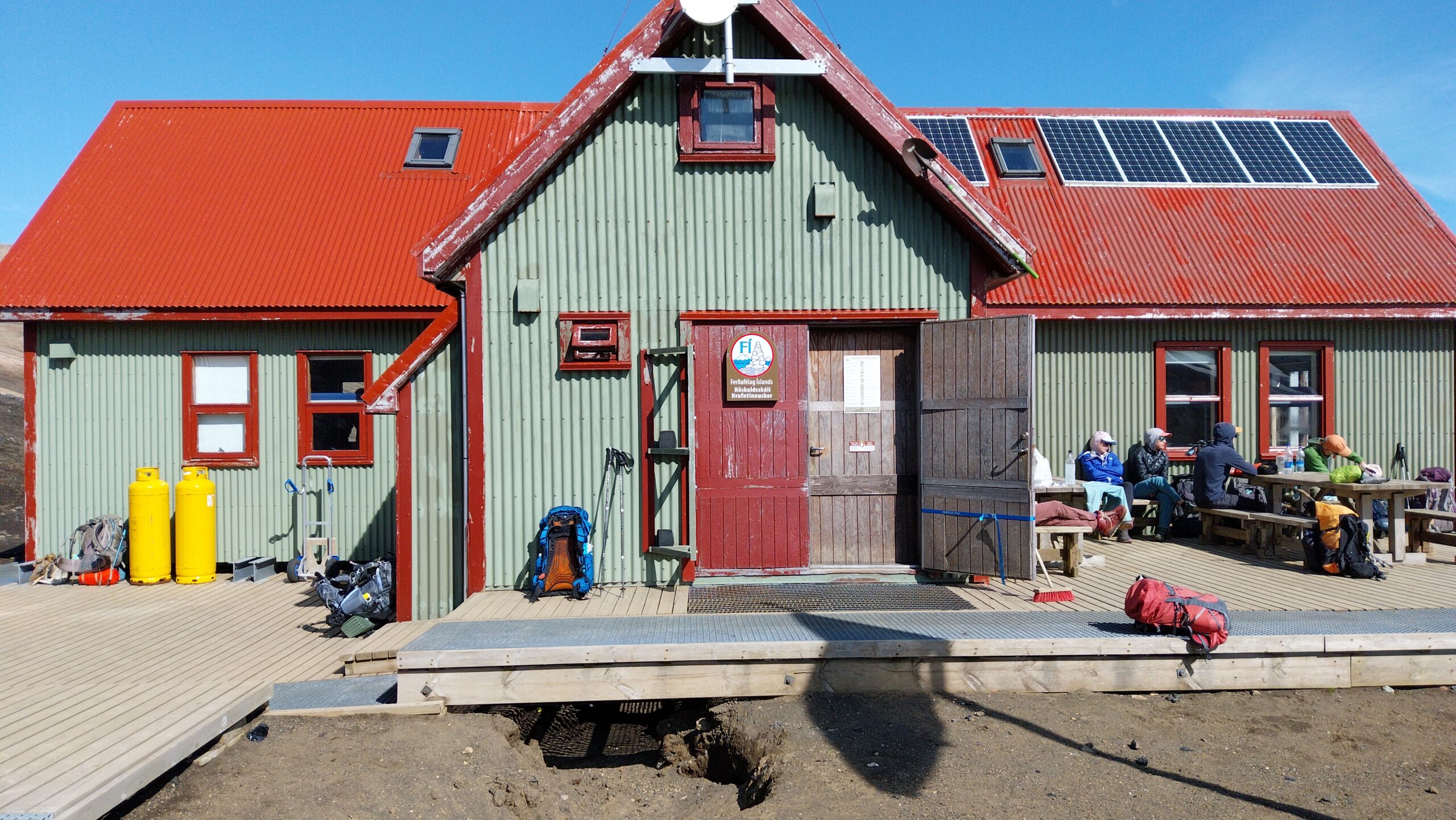
By 2009, the impact of tourism was already impossible to ignore. All the huts have an entrance hall where wet clothes are supposed to be left. This was no longer possible at the Emstrur hut, as the entrance hall was crammed to the ceiling with Samsonite suitcases. The owners of the Samsonite suitcases hiked from hut to hut carrying a small backpack, whilst a bus transported the Samsonite suitcases from hut to hut. I’ll never forget the lady who opened her Samsonite suitcase, took out a make-up case along with a strange roll, hung the roll on a nail outside, unrolled it – whereupon it turned out to be a roll-out mirror – and used it to do her make-up for dinner.
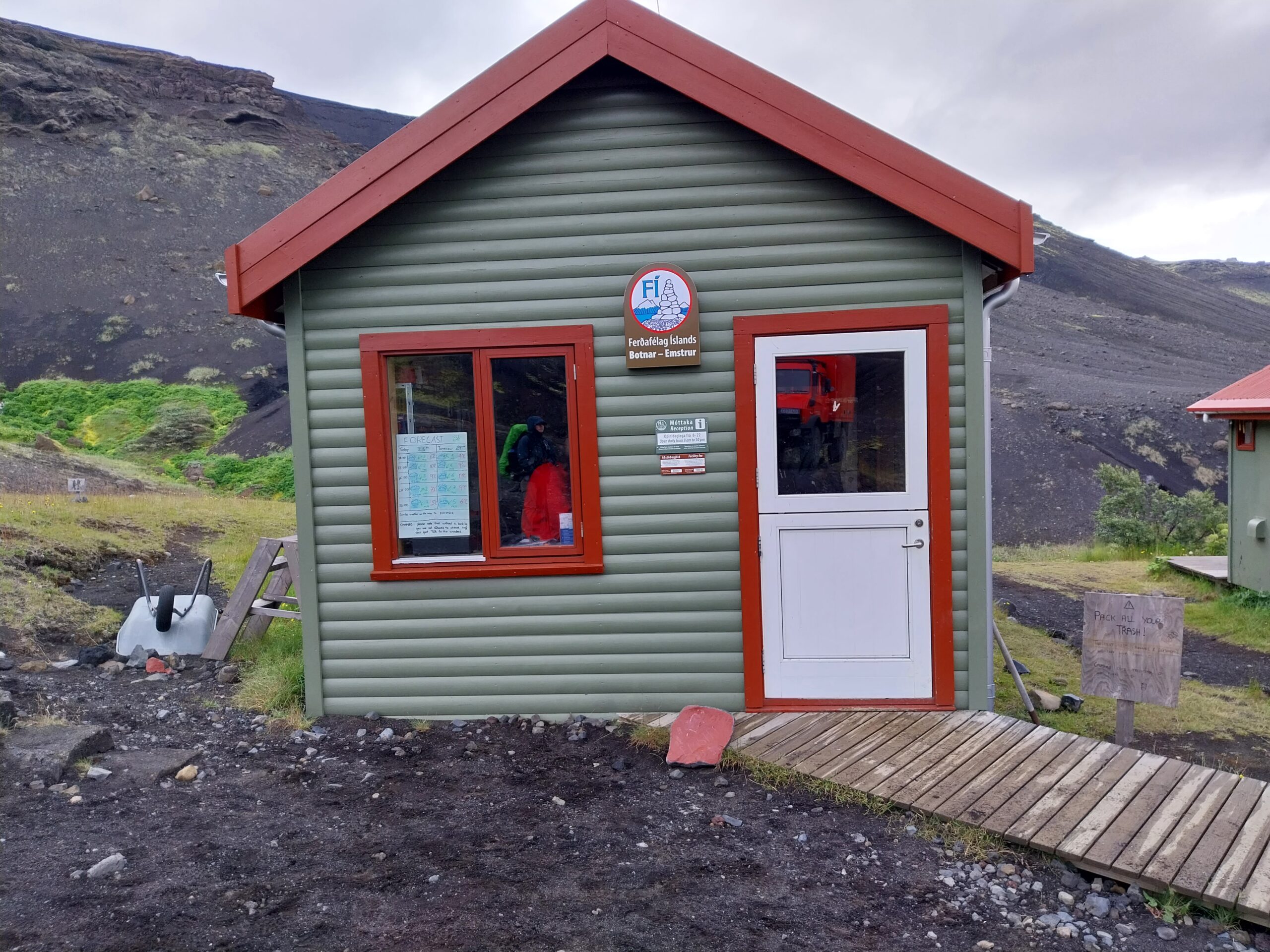
It was therefore to be expected that one day mass tourism would also take effect on the Laugavegur. The ever-increasing influx then led to there now being three huts available for overnight stays at Emstrur, and the hut warden at each hut being relocated to a separate hut, where he could now sell a variety of drinks and snacks.
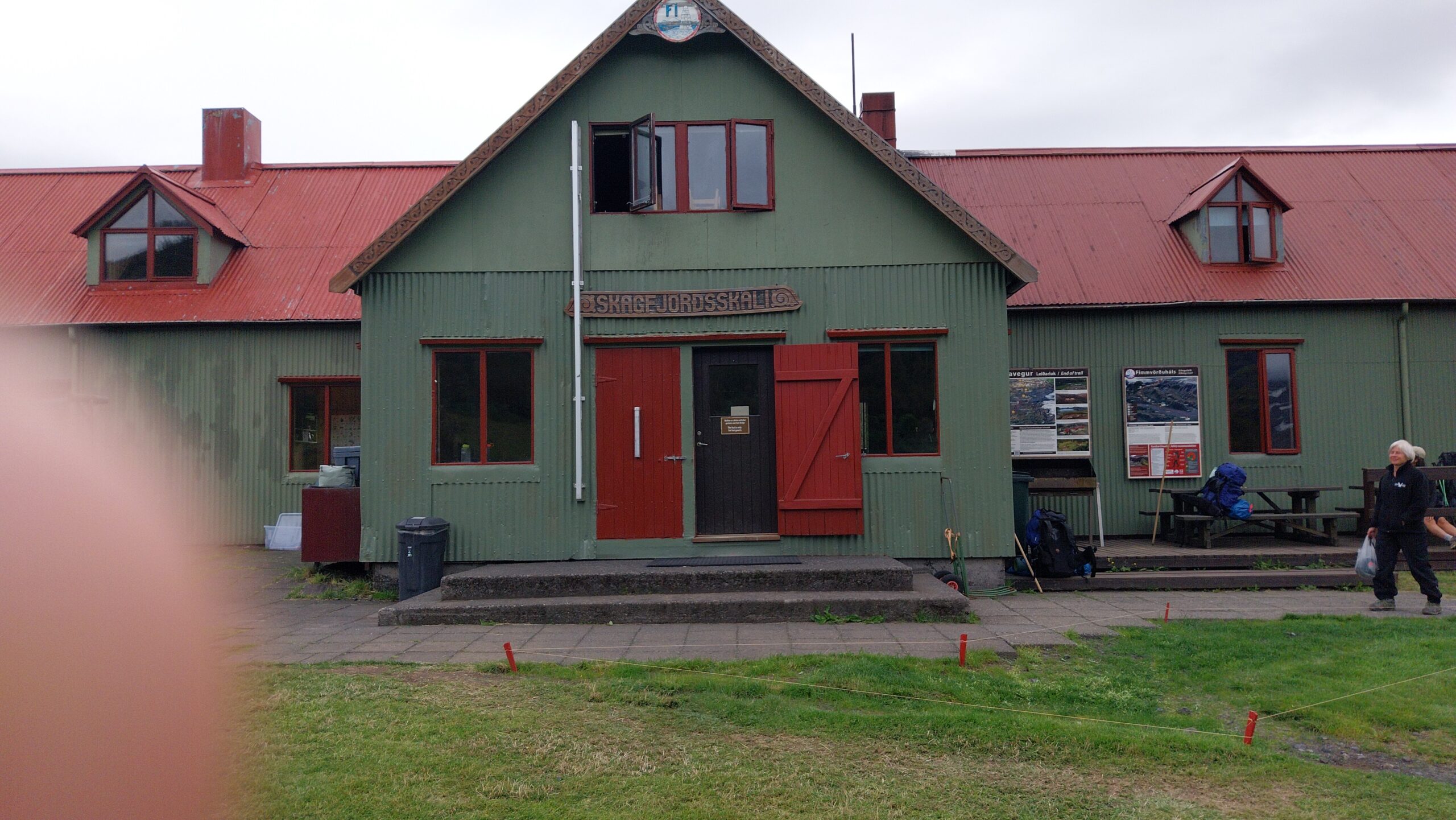
And so, the negative aspects of mass tourism have also made their way onto the Laugavegur. The ascents and descents along the trek – which used to be quite safe underfoot – have now been worn down so much by the countless hikers that the utmost care is required to avoid slipping. One day, crampons may even be necessary here. The route has also been altered. The route from Emstrur to Þórsmörk once ran along the canyon, offering magnificent views; now it runs further east, featuring numerous ascents and descents. To compensate for this, the track near Landmannalaugar has been upgraded to a walking path through the lava boulders.


The huts have been hit even harder by the effects of mass tourism. Use of the kitchen is now prohibited in all huts between 11 pm and 7 am; at the Landmannalaugar hut, the water is even turned off during this time, which also affects the toilet flushing system there. Fortunate indeed is the person who can successfully hold it in until then. The price for an overnight stay in a mattress dormitory has also risen slightly; whilst in 1982 it was still in the single-digit euro range, it now stands at around €110 per person – more than double the cost of a single room in a 4-star hotel in Paris. Another curious phenomenon is that guests have no internet access at any of the huts; it’s only available again once you’re away from the hut. Apparently, this doesn’t apply to the hut warden, as they have internet access at all times.
And so, over the course of 44 years, Laugavegur became Ouchvegur.
